ALPIN HERBS
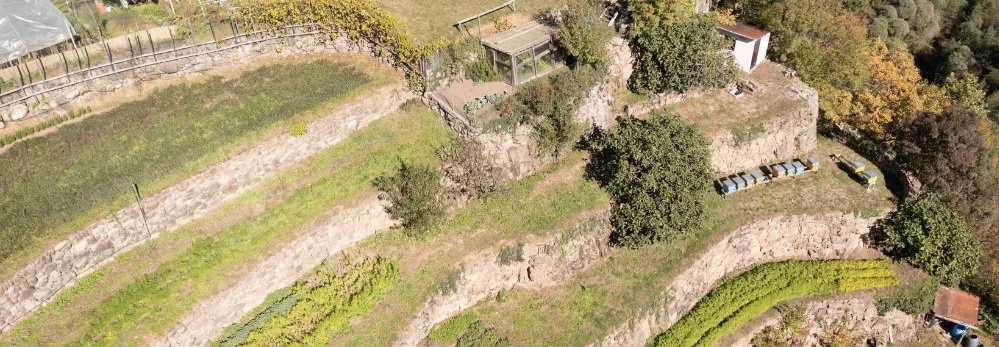
A family garden center transformed into a farm growing aromatic herbs, mixed greens, watercress, and edible flowers for restaurants. In Ora, in the province of Bolzano, Thomas Spornberger and his mother are the owners of Alpin Herbs. Here, in an unspoiled alpine setting, they care for over 200 different types of plants and flowers. No strange crossbreeds, no hybrids, just plants that exist in nature, coming from every corner of the globe.
Alpin Herbs: flavor and color grown in pots
There are no hybrids, no strange crossbreeds, only aromatic plants, mixed herbs, cress, and edible flowers that grow wild in nature. This is the essential starting point for the cultivation process carried out by Thomas Spornberger for Alpin Herbs.
Thomas's story, like that of the vast majority of Italian excellence, is a family story. A family of gardeners, in this case.
His father used to grow plants, and as a child he learned the business by following him around the greenhouse. Over the years, alongside this know-how, he developed a real passion for unusual and rare plants. So he began searching for them all over the world, collecting them and, above all, growing them. The result?
The discovery of a new product that was not available on the Italian market: aromatic herbs, mixed greens, and edible flowers that chefs use to add color, fragrance, and flavor to their dishes.
The fragrant adventure of Alpin Herbs officially began in 2013, when we at Longino learned about this exclusive project and convinced Thomas to expand production, create a dedicated brand, and start marketing the plants to restaurant chefs.

Thomas's challenge has always been to find plants with distinctive flavors that can be paired with any dish: there is one that tastes like chocolate, one like licorice, and another like oysters, just to name a few. His passion was born from long conversations with a Michelin-starred chef friend from Val Pusteria.
The tradition of decorating and garnishing dishes with edible flowers and herbs has been around in Europe for many years, but it has been slow to catch on here. This may be because many restaurants have their own vegetable gardens, as is the case in France, or because we Italians tend to think that transporting a delicate product such as flowers is extremely complex.
Alpin Herbs' first achievement was to overcome logistical difficulties and distribute hundreds of fresh products, including herbs, flowers, and mixed greens. Deliveries take no more than four days in Italy and up to a week in the rest of the world, all with a guaranteed product shelf life of 14 days.
The second achievement was to revolutionize the cultivation process by shifting the focus from the rhythms of the soil to those dictated by the succession of courses on a restaurant table. Thomas is able to plan which and how many plants to produce based on the requests and needs of each individual chef. This ensures maximum product customization and flexibility. As a result, Alpin Herbs customers can order even very small and, above all, varied quantities.
Thomas does not weigh herbs, flowers, and mixed greens: he counts them
Yes, Alpin Herbs packages are sold by quantity. Each box contains a specific number of the best, tender, and freshest buds. All are cut by Thomas, his mother, and their employees, strictly by hand with scissors that resemble manicure scissors. As soon as an order is received, they go to the greenhouse and harvest the requested amount, shipping it immediately on the same day.
This way, the chef knows exactly how much each bud, each flower used for decoration, and each seedling added to enhance the flavor of the dish or decorate the plate costs. And so, even the food cost is perfectly under control.
So far, Alpin Herbs grows over 40 edible flowers, about 20 types of cress, and 180 different herbs in pots.

Alpin Herbs, a year-round production cycle
Everyone involved in agriculture and direct cultivation knows this well. Those who specialize in the production of delicate specimens such as flowers and mixed herbs know it even better: the growth of a plant is totally influenced by seasonality, sunlight, and the growing environment. The choice, therefore, is between intensive cultivation that ignores the changing seasons or one that follows them.
Thomas Spornberger, owner of Alpin Herbs, has opted for the latter. To produce his aromatic herbs, edible flowers, and mixed greens, he has chosen not to go against the rhythm of the seasons but to find a respectful compromise between the life cycle of the plant and the guarantee of continuity of production.
As a great plant researcher, he understood that good cultivation is not only about yield but also about the quality and shelf life of the product. All Alpin Herbs plants are grown in pots. This allows for meticulous care of the soil, without any contamination, not even from groundwater. Irrigation is mainly rainwater and is carried out only from the saucer.
But there is also a second, not insignificant advantage: this way, the plant is better preserved. In fact, excess water can cause it to wilt or even mold. Furthermore, by never wetting the leaves, there is no risk that the spray of water will wash away the flavor.
In addition to these precautions, it should be noted that Alpin Herbs is based in Ora, in the province of Bolzano. The excellence of its cultivation is therefore further enhanced by the alpine environment and its fresh, unpolluted air.

Alpin Herbs: from seed to plant
The Alpin Herbs cultivation model follows the principles of organic farming as closely as possible—they are currently awaiting certification—with a biodynamic approach and no use of chemicals.
The entire process—from seed to cutting, from sprout to plant, from harvest to packaging—is carried out on the farm.
The seedlings never have time to grow too much, meaning they never lose the tenderness typical of shoots: every aromatic top, every edible flower, every cress bush arrives at the chef's table fragrant.
If a plant becomes diseased, it is immediately turned into compost. A closed cycle that fully respects environmental sustainability.
Alpin Herbs manages to guarantee continuity of production while respecting seasonality: in January, chefs can count on a limited number of products because there is less sunlight. During the summer, however, they have the entire range of aromas, colors, and textures at their disposal.
Research and Innovation
Over the years, Thomas has developed a real passion for unusual and rare plants. This ongoing research has led to the introduction of a new range of products in collaboration with Ordine Contadino, Azienda Agricola Nadalini Danilo: dried herbs and flowers.
The crops are irrigated using drip irrigation and only as much water as is strictly necessary, with water supplied from a private well that draws pure groundwater directly. The various essences cultivated have been carefully selected, with each variety chosen in collaboration with an herbalist to ensure they have a higher concentration of aromas and essential oils that are transferred to their use. Careful soil analysis was carried out to assess the organic/mineral composition of the soil and, based on these results, we decided where and what to grow.
Harvesting is done manually during the coolest hours of the day. The harvested herbs are then immediately transported (within minutes of harvesting) to the drying room and placed on wooden racks with food-grade netting, which allows for optimal and uniform drying.
Drying takes place naturally, without the use of heat, but with a dehumidifier, which allows the plants to retain their essential oils and thus preserve their aromas, smells, and taste.
Strict controls ensure the complete absence of chemicals and guarantee the extreme quality and purity of Alpin Herbs products.